People wanted to participate, without becoming visible too soon.
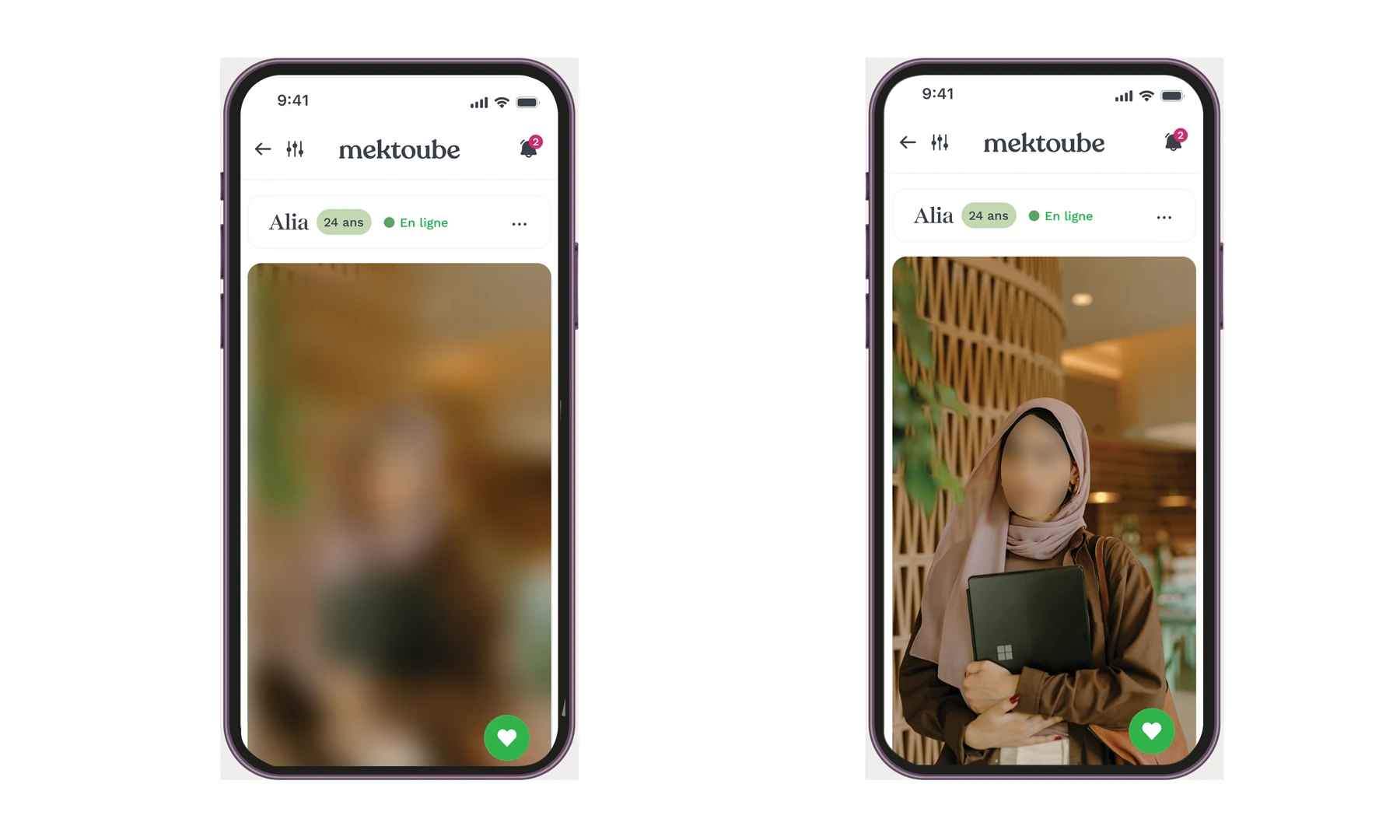
A photo was mandatory on Mektoube. Full-photo blur protected identity, but also removed posture, setting and style: the context that makes a profile feel like a person. Moving from messages to a call created a second threshold, where control could disappear too quickly.
The goal was progressive trust: let people decide when they become more visible and reachable.
Privacy had to work within real product rules.
I combined behavioural dashboards, user conversations, surveys and usability tests. Photos had to remain mandatory. Existing full-blur settings could not change without the user’s choice. Calls could not reveal a personal number, and declining had to have a consequence in the product.
Keep social context. Protect identity.
For new uploads, I designed two clear options: a visible photo or a face-blurred photo. Masking the face preserved the rest of the image. Existing users kept full blur until they changed it themselves. I specified detection, preview, upload, editing and rendering behaviour across the app.
A call starts with permission, not an interruption.
A user sends a call request. The recipient can accept once, allow future calls or decline. Declining pauses new requests for seven days. After a missed call, the recipient can call back immediately while the original caller has to wait. The call stays inside the app.
A refusal changes the system
The seven-day pause prevents an immediate sequence of repeated requests.
A missed call is not a refusal
The person who missed it can choose to call back without the same waiting rule.
Trust lives in the states people actually encounter.
I owned the work from research through flows, UI, UX writing, behaviour documentation and QA. The key delivery question stayed the same across every state: does the person understand what they control, what the other person can do and what happens next?
Evidence & scope
No feature-specific uplift is claimed here. The case demonstrates product rules, interaction detail and delivery ownership.